When the workflow becomes physical.
When the bottleneck is a mixing vessel or a filling line, not a spreadsheet, code alone won't fix it. Valtrin acts as the technical and commercial bridge between your operation and specialist equipment manufacturers — we don't build the machines; we make sure the right one arrives and works.
Solution 04 · Machines & equipment
We don’t build machines. We make sure the right one arrives.
 Illustrative
The problems this solves
Buying machinery shouldn't be an act of faith.
Growth means manpower
More output currently means more people on the line — not more capacity per shift.
Overseas buying is risky
Specifications, contracts and acceptance criteria in another language and another business culture.
Quotes that can't be compared
Different inclusions, different assumptions, no common specification — the cheapest quote rarely is.
No local accountability
When the machine arrives and something's off, who answers the phone in your time zone?
Before / with Valtrin
Buying a machine, held differently.
The risk sits with you at every step
The risk is managed at every step

The bridge
From workflow to machine.
Valtrin acts for you as specifier, technical and commercial translator, procurement manager and integration supervisor. You buy direct from the maker, with local accountability — and the machine gets specified by someone who understands the line it joins.
- Current process
- Business requirements
- Local support
- Study & specify
- Evaluate vendors
- Coordinate & validate
- Equipment design
- Machine manufacturing
- Factory testing
- Delivery & commissioning
- Digital monitoring
- Ongoing support
The deal structure is deliberate: the manufacturer sells the equipment directly to you, and Valtrin invoices separately, in MYR, for specification, procurement management and integration. We are never in the capital-goods supply chain — the machine's warranty sits with its maker, and any commission we earn on the equipment is put in writing before you commit.
What the fee does and doesn't cover
How the money works, stated plainly.
How we're paid, in the open
On equipment we source, we earn a commission from the manufacturer. You'll be told the arrangement in writing before you commit to anything, you always see the manufacturer's quote yourself, and the equipment contract is between you and them — we never mark up the machine. Prefer us with no supplier commission at all? Say so before we start and we'll quote the job fee-only instead — the fee is higher, you see both numbers, and you choose.
Hardware is at cost
Where a stage includes sensors or monitoring hardware, it's passed through at supplier cost and itemised on your quote. The sourcing fee covers a single machine or line with a purchase value up to RM 400,000 — above that, quoted separately before any work starts.
Every engagement is quoted for the job and agreed before work starts.

We don't build machines. We make sure the right one arrives and works.
Mixing, emulsifying, water treatment, filling, sealing, packing, palletising and material handling — specified against your product, your throughput and your floor, then sourced by approaching manufacturers directly, in their language and yours.
Acceptance criteria are written into your purchase order before the order is placed — so "does it work?" is a test with a date and a named result, not a hope. And because you contract the manufacturer yourself, the remedy for a machine that underperforms sits with the people who built it.
Discuss a Workflow →What we can source
Ten kinds of machine, one question each.
We specify and source equipment for both halves of a line — making the product, then packing it. Below is that equipment grouped the way an owner thinks about it: by the job that is currently done by hand. You don’t need a model number to start the conversation; you need to know which of these is costing you the most people.
First half · making the product
Mixing, water and filling.
Wet-side process equipment for creams, lotions, gels, shampoos, detergents and other liquids — the part of the plant that decides whether a batch comes out the same twice.
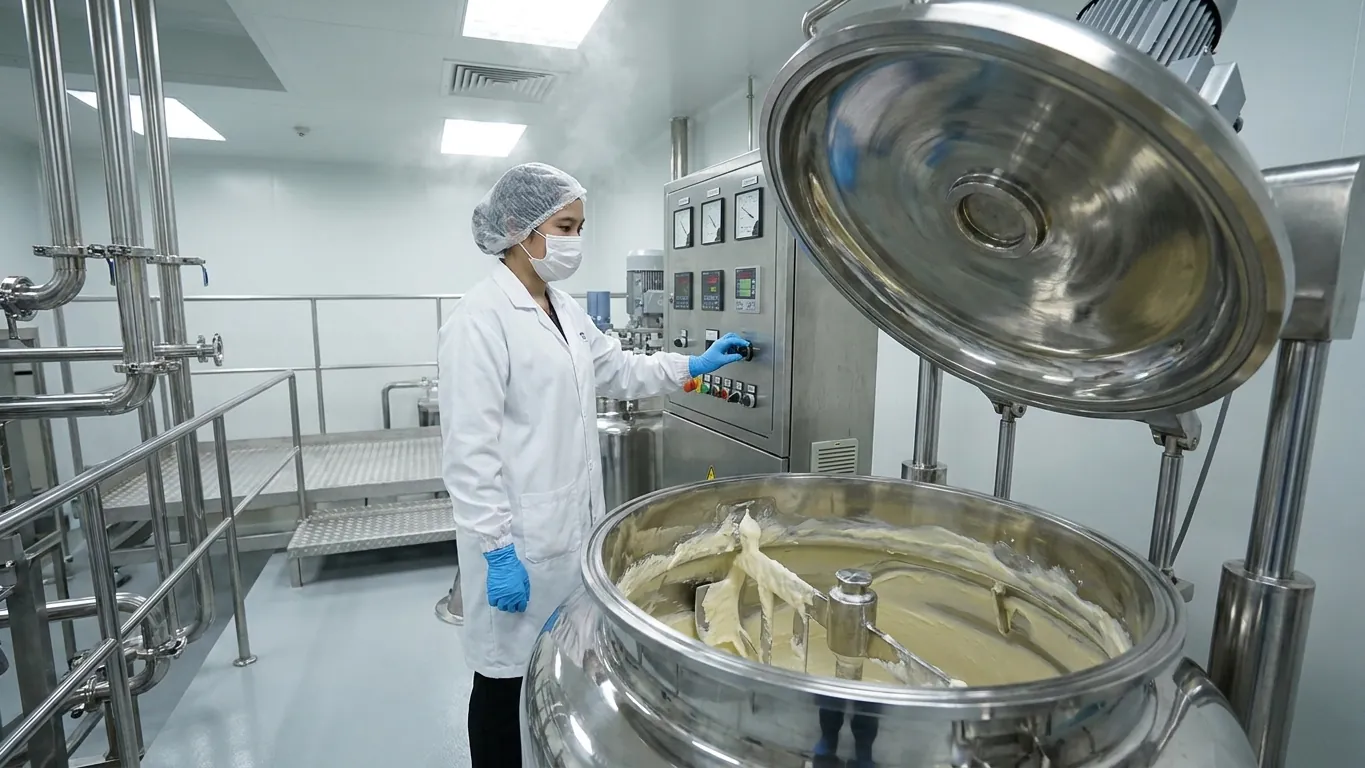
Mixing and emulsifying a batch
Vacuum emulsifying and homogenising vessels — the machines that turn oil, water and powder into one stable cream, lotion or gel that does not separate on the shelf. Wall-scraper agitation, heating and cooling, and vacuum to pull the air out so the batch is dense rather than whipped. From ten-litre bench units for trials up to several thousand litres.
Suitsanyone still mixing by hand or with an open drum stirrer, and any producer whose batches come out slightly different each time.
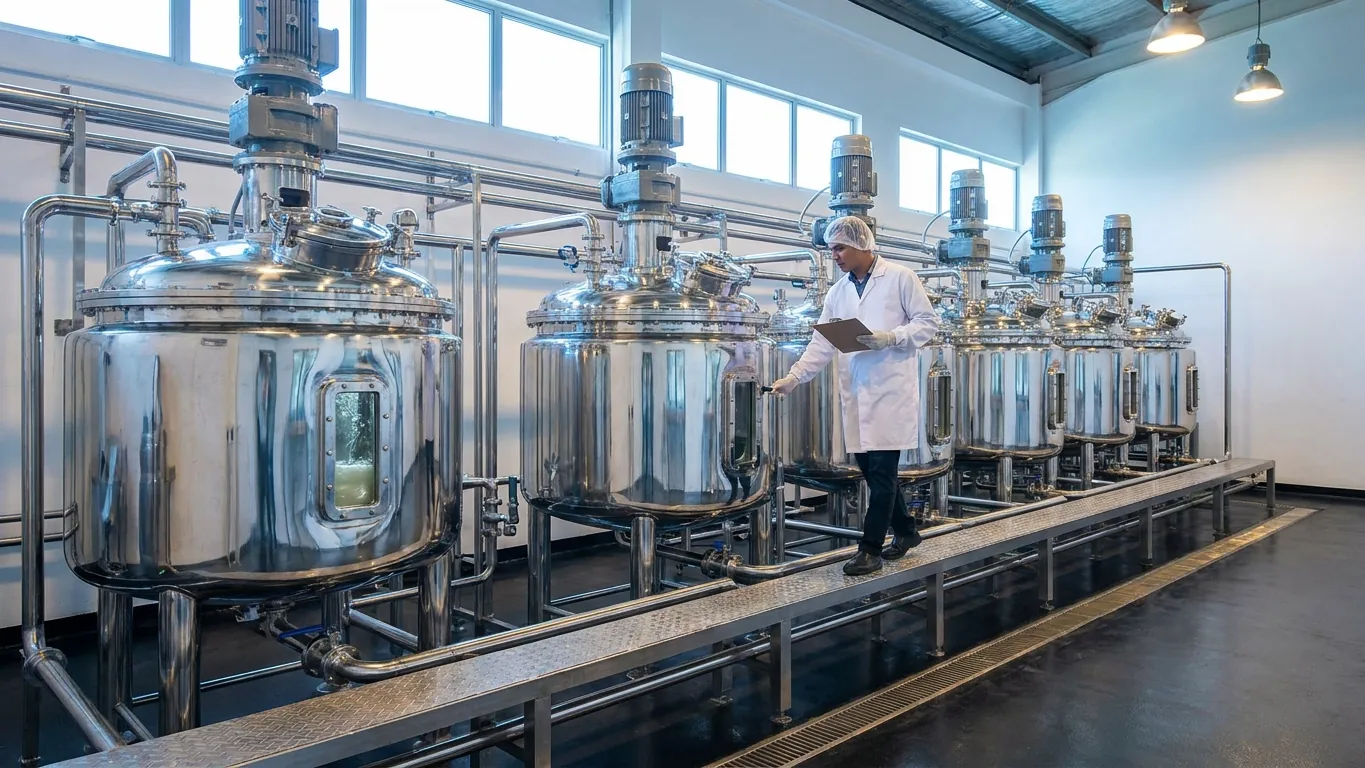
Blending and holding liquids
Jacketed tanks that mix, heat, cool and hold — shampoo, shower gel, surface cleaner, liquid detergent. Sized from small batch tanks to several thousand litres, with hygienic pipework and clean-in-place connections so the changeover between products is washing rather than dismantling. Corrosion-resistant builds exist for aggressive chemistry.
Suitsproducers whose bottleneck is batch size rather than filling speed, and anyone losing hours to cleaning between products.
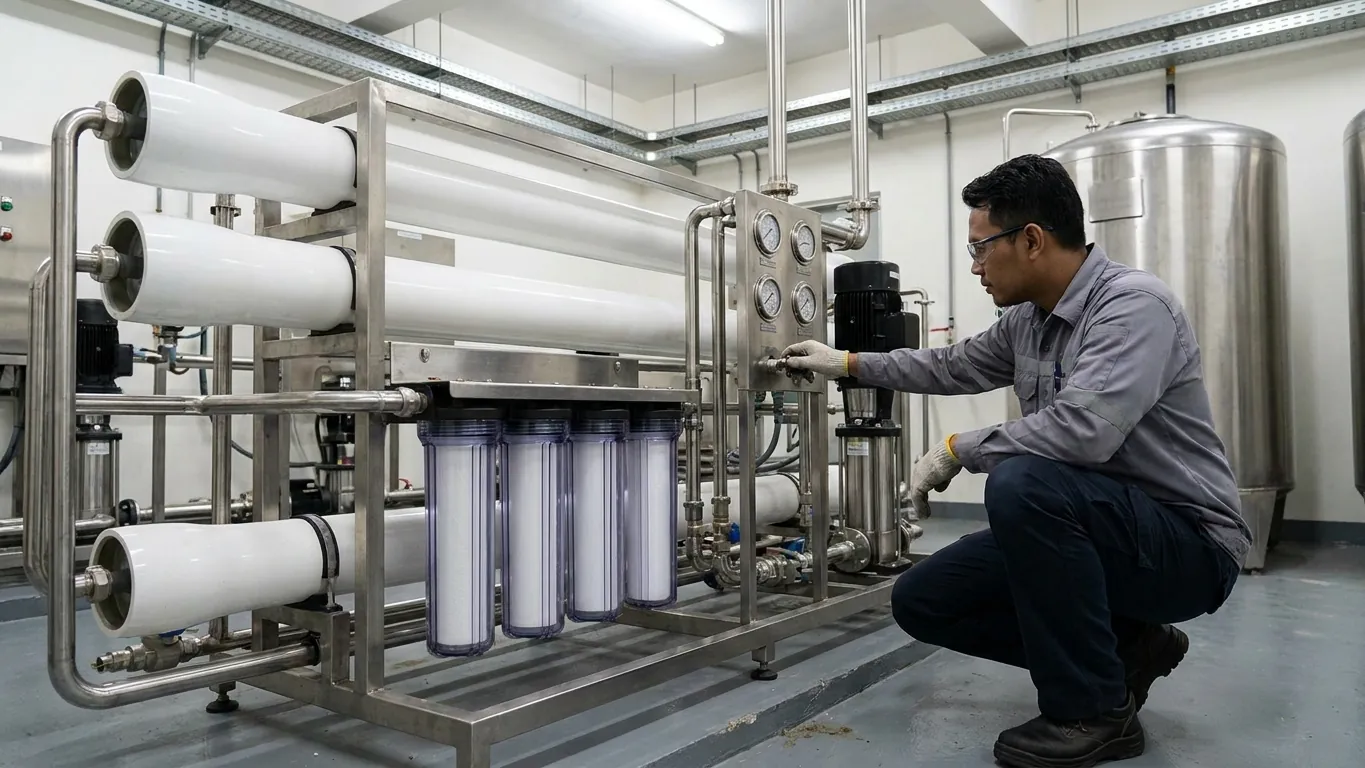
Getting the water right first
Reverse-osmosis and deionised water plant, from under a tonne an hour up to twenty. In personal care and household products the water is most of the formula, so its hardness and conductivity decide whether the batch behaves. Supplied as a packaged unit with pre-treatment, storage and sanitising, sized to what your line actually draws.
Suitsany wet-side producer on mains water, and anyone whose product quality moves with the season or the supply.
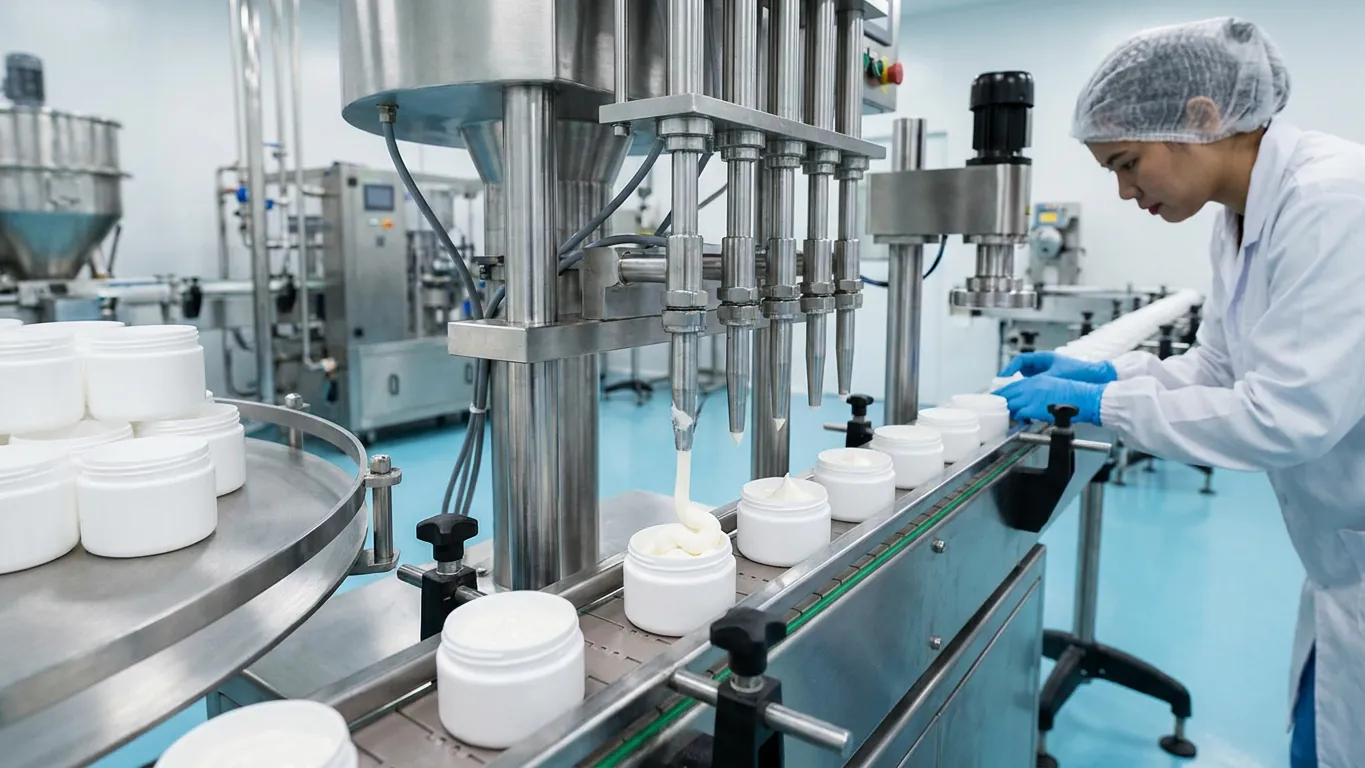
Filling and closing the container
Piston and servo fillers for anything from thin liquid to heavy paste — jars, bottles, tubes and sachets — then capping, sealing or crimping. Fill volumes from a millilitre to ten litres, with the accuracy that decides whether you are giving product away. Semi-automatic single heads through to inline multi-head machines.
Suitsanyone hand-filling into a jug or a jar, and any producer giving away overfill because the target is guessed rather than measured.
Second half · packing and shipping it
From the filled container to the pallet.
Once the product is in its container, the remaining hours go into presenting, boxing and moving it.
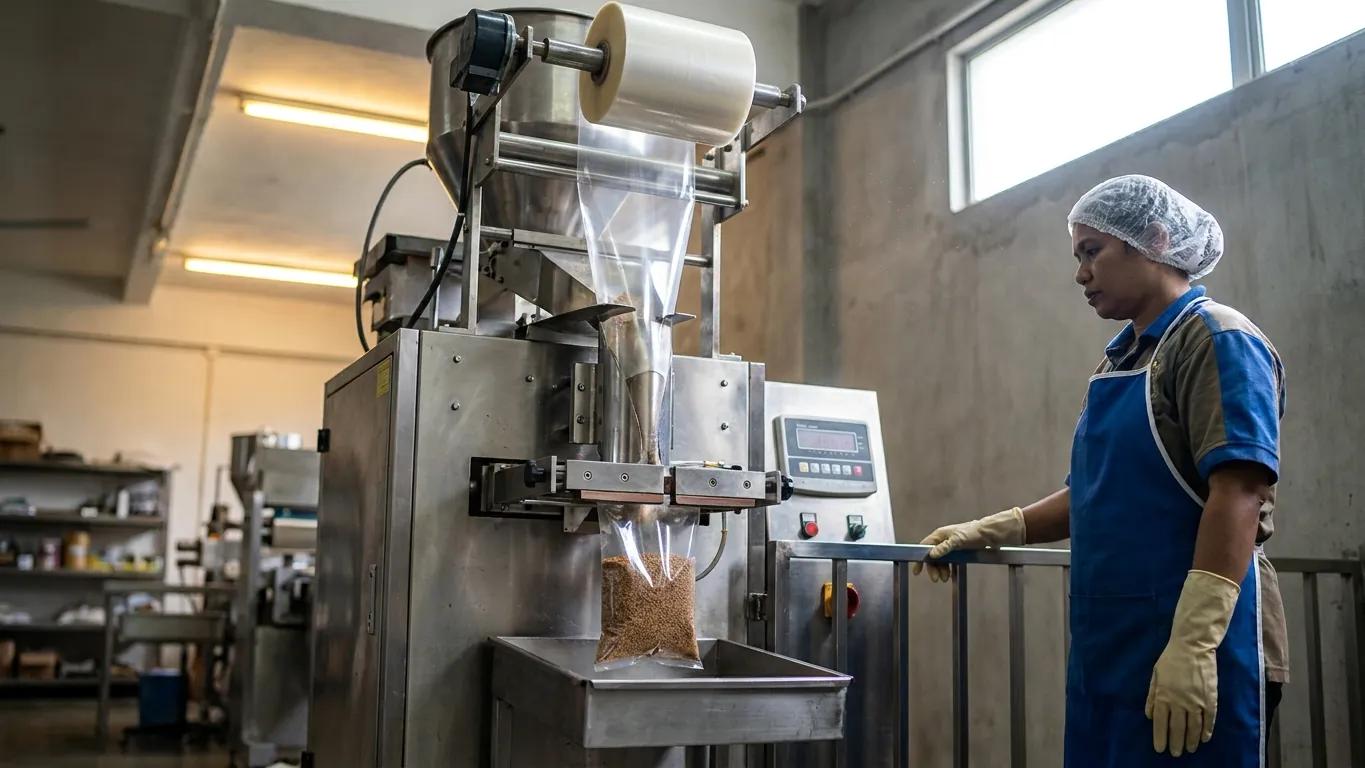
Bagging and sealing the product itself
Machines that take a loose product and close it in film or a ready-made bag — a portion of food, a sachet, a filter cartridge, a handful of small parts. Some form the bag from a roll as they run; others pick a flat pouch off a stack, fill it, draw the air out and seal it shut.
Suitsanywhere someone stands at a bench with a hand sealer, or where the pack has to look identical every time because it goes on a shelf.
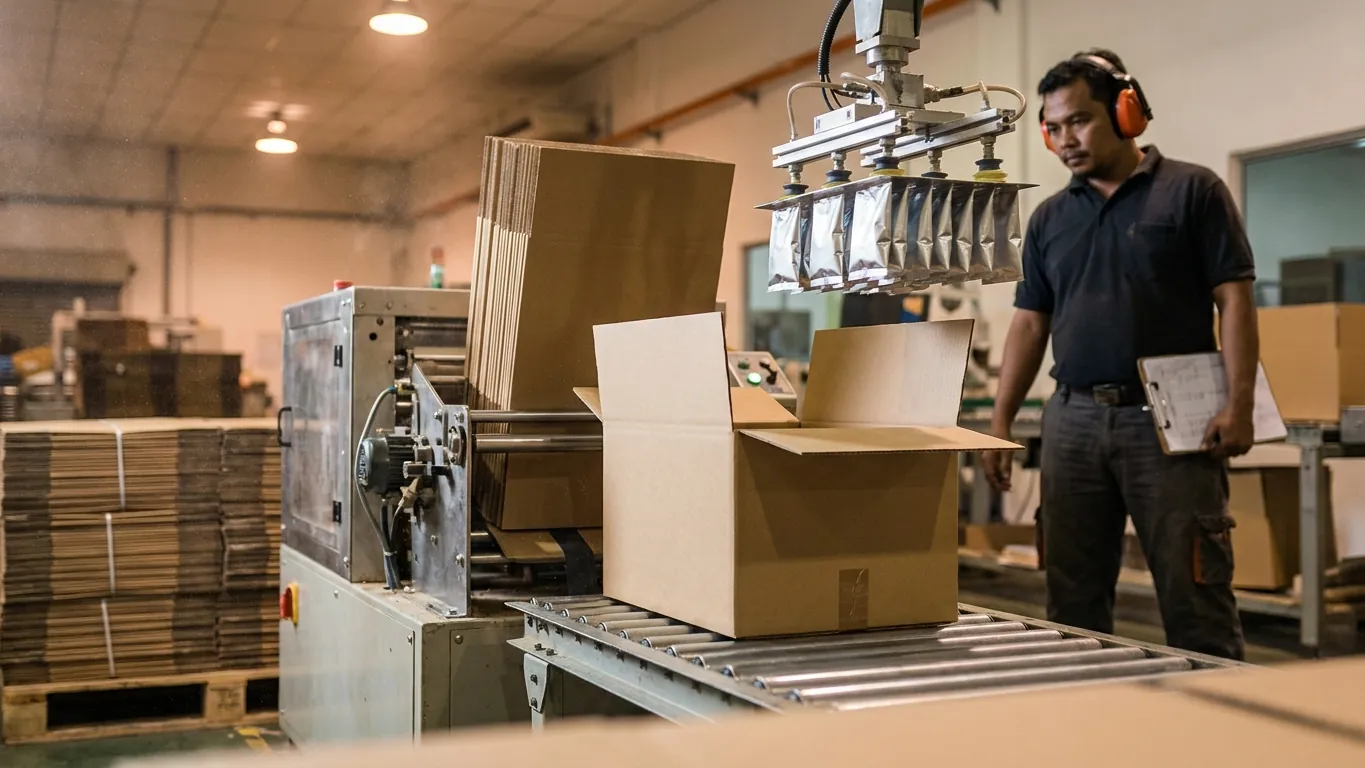
Making up cartons and filling them
One machine pulls flat cardboard from a stack, folds it into a box and seals the bottom. Another puts the product in — a simple pusher, or an arm that picks items off a moving belt and lays them in a set pattern. They run as separate machines or joined into one line.
Suitsoperations where two or three people spend the shift building boxes and hand-packing them, and box count per hour is what limits despatch.
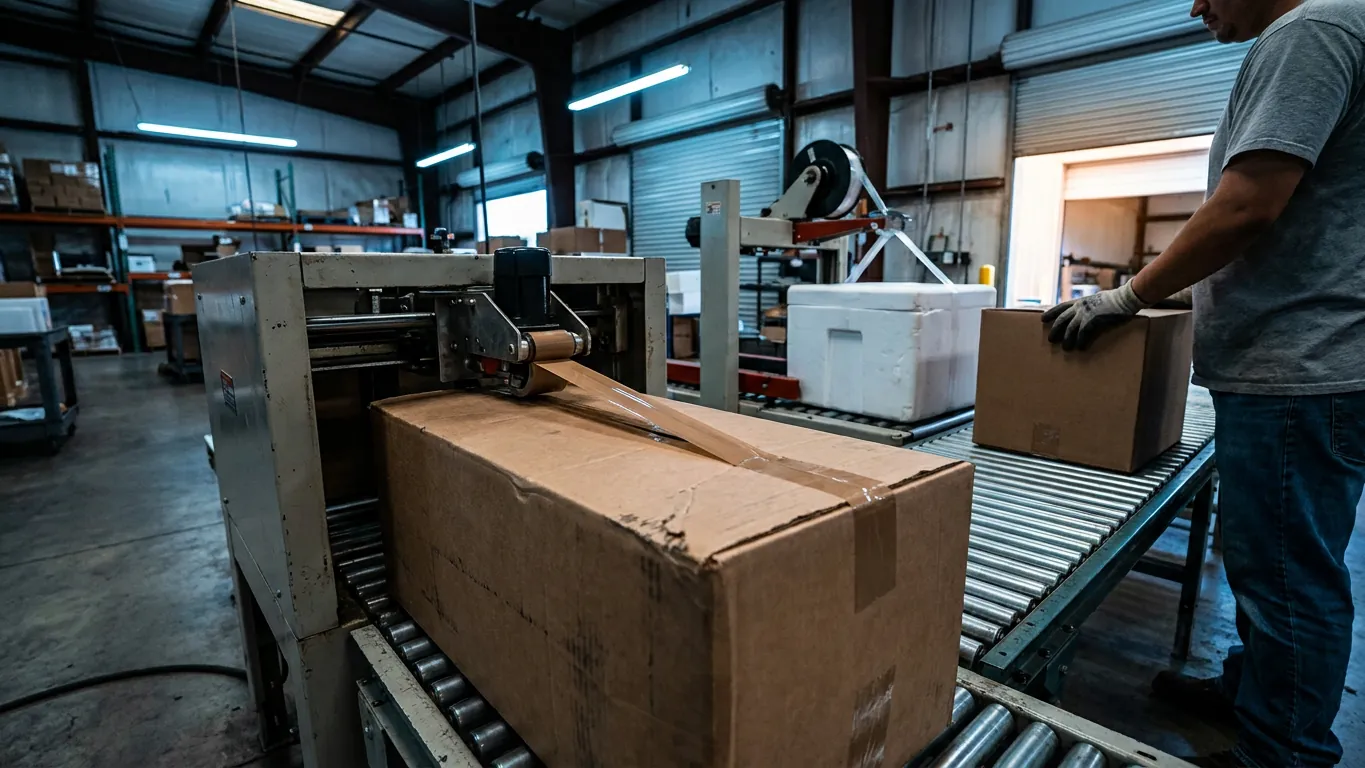
Closing and sealing the box
From tape along the top and bottom of a filled carton, up to machines that seal all four edges or wrap a band right around the box so the lid can't lift. That band replaces plastic strapping — the version chilled and frozen packers usually want, because it holds a foam box shut without cracking it.
Suitsanyone taping cartons by hand, and any despatch whose boxes have arrived at a customer burst open.
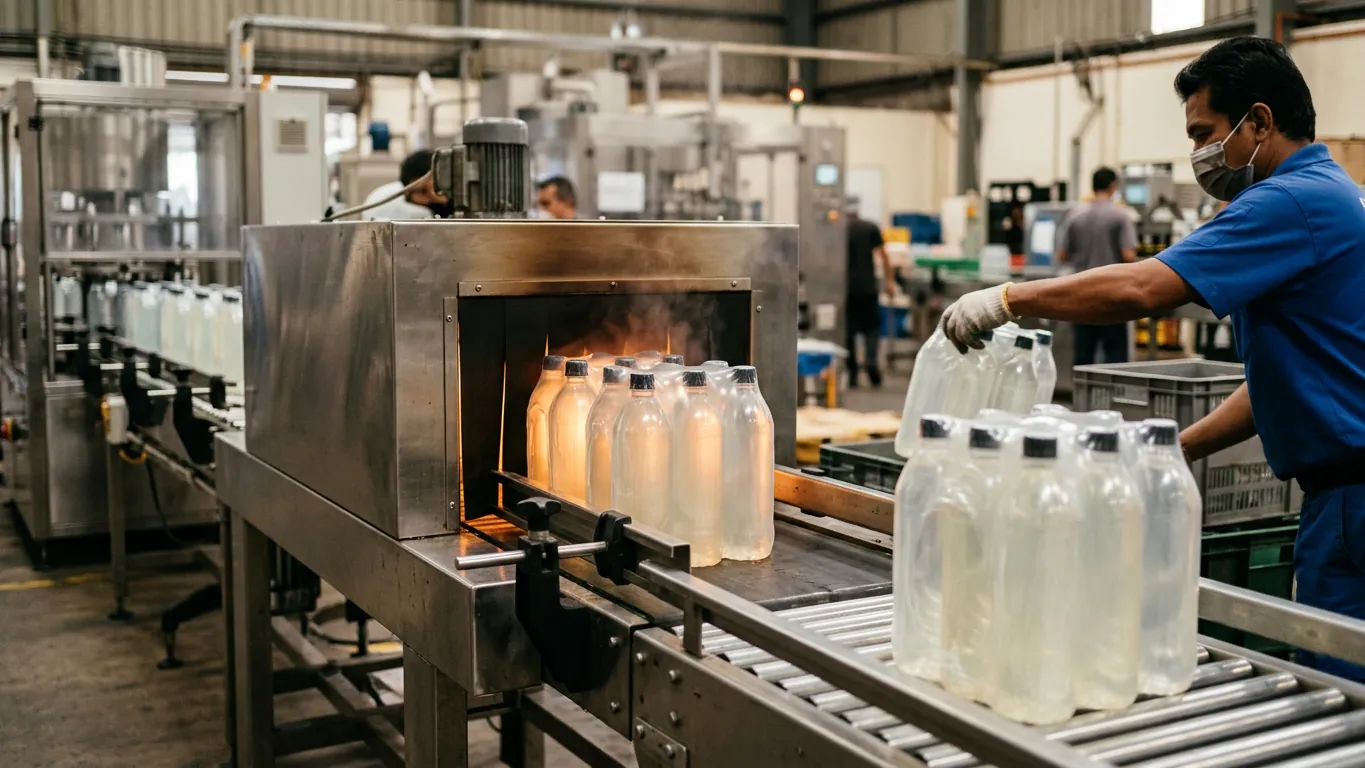
Bundling units into one saleable pack
Wrapping several units together in film and shrinking it tight, or wrapping a single printed carton in clear film with a tear strip. It turns loose units into one pack that prices as one line and ships as one unit.
Suitsfood, drink and personal care sold in multipacks, and any product where the outer film does a job — tamper evidence, dust, damp, or simply looking finished.
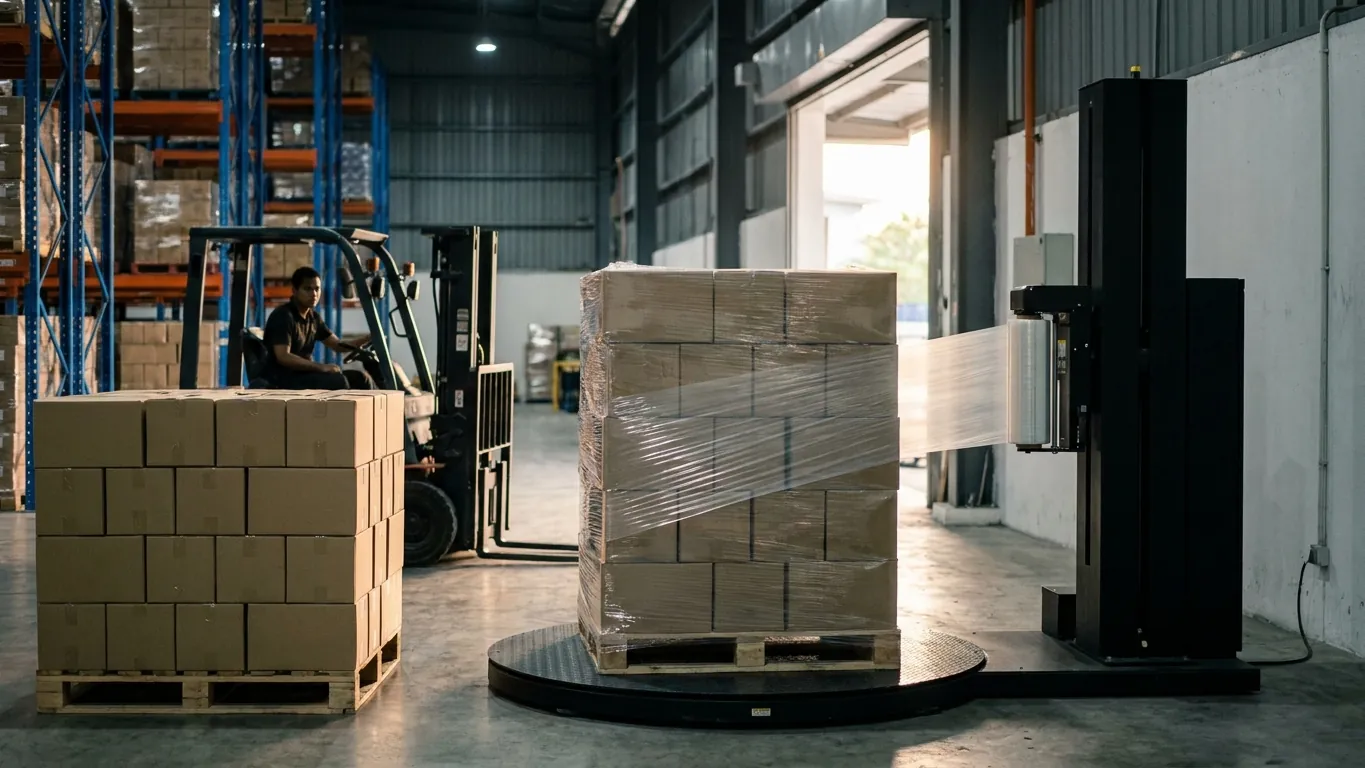
Getting the pallet built, wrapped and out the door
Boxes stacked onto a pallet, wrapped in stretch film, often strapped. Stacking can be a turntable and a person, an arm that lifts each carton into a pattern, or a robot working alongside your staff. Wrapping runs from a turntable the pallet sits on, through an arm for loads too heavy to spin, up to a ring fast enough to keep pace with a busy despatch bay.
Suitsany warehouse where the last two people on the shift wrap pallets by walking backwards around them.
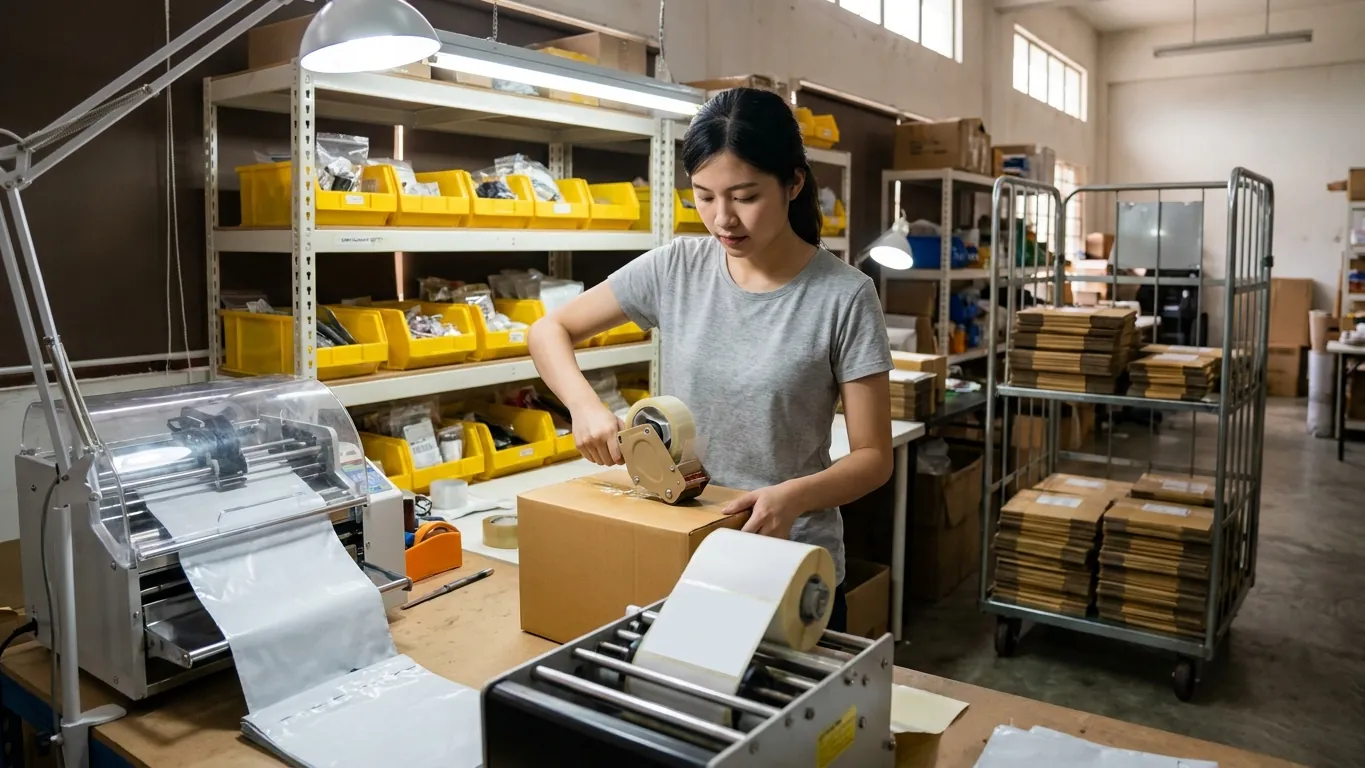
Packing and labelling online orders
A parcel is scanned, weighed, bagged in film and has its courier label printed and applied in one pass, with anything that doesn't match pushed off the line. Built to talk to warehouse software, so the label comes from your order system rather than from a person reading a screen.
Suitsonline sellers and third-party warehouses packing hundreds of parcels a day, where the cost is packing labour and the risk is a label on the wrong parcel.
Machine speeds published by manufacturers are best-case figures, for one product, on one day. We check them against your product, your carton and your power supply before anything goes into a quote — that is what the assessment is for.
Modern process equipment can report what it actually did — batch temperatures, cycle times, output, downtime — over the same standards your business systems already speak. Most suppliers stop at the machine. We specify that data out of the machine at purchase, when it costs nothing to ask for, and we build the systems that use it. If a machine cannot expose what you need, we tell you before you buy it rather than after.
When the workflow becomes physical.
Three stages of one purchase
How far into the purchase do you want us?
Stage 1
Find Out If A Machine Pays
You have a slow manual step and a supplier quote you cannot judge.
Who uses it: you, and the supervisor of the one line or bench that is slowing you down.
Quoted
quoted before we start · 2 weeks · includes a day on your floor
- A full day timing the actual job — units per hour, where it stalls, how much comes back as rework — then the honest verdict: a machine, a jig, or just a changed sequence.
- Nobody logs into anything. You get paper: the verdict, the numbers, and a requirement sheet.
- Nothing is connected and no supplier is approached at this level.
- The one-page requirement sheet is yours to keep and hand to any supplier, including ones we have never met.
Works for: filling · mixing · cutting · drilling · labelling · sorting · weighing · testing — as well as packing and palletising. Any bench where output is limited by how many hands are on it.
Where it stops: no supplier is approached and no quotes are collected. Move to the sourcing stage once you have decided to buy.
Priced for your job once we know the bench and the shift pattern, and quoted in writing before anything starts. Credited in full against the stages that follow, so finding out costs you nothing if you go ahead. On this line the assessment does the Workflow Blueprint’s job — there is no second scoping fee.
Stage 2
Buy The Right One
You have decided to buy, and you don’t want to be the least-informed person in the room.
Who uses it: you, whoever signs the purchase order, and the engineer who will run the machine.
Quoted
quoted after the assessment · 6 weeks, plus however long the makers take to quote
- A full written specification — output, tolerances, power and air, safety, spares, and what “accepted” means — then every maker approached on identical terms so the quotes actually compare.
- Nobody logs in. You get the specification, the comparison, and a purchase order with the acceptance test written into it.
- Quotes compared at real landed cost: shipping, duty, install, spares — in plain language, side by side.
- The shortlist is yours to cut. Any manufacturer we earn commission from is named before it is drawn.
Works for: one machine or a short line — an emulsifier, a blending tank, a water plant, a filler, a capper, a labeller, a case packer, a palletiser.
Where it stops: at accepted and commissioned. Nobody watches the machine after handover — that is the monitoring stage.
Covers one machine or line up to RM 400,000 purchase value; above that the scope is agreed separately first. You contract and pay the manufacturer directly, in their currency — we won’t pretend to fix an exchange rate we don’t control.
Stage 3
See What It Actually Produced
You have bought the machine and nobody can tell you what it actually produced yesterday.
Who uses it: you, on your phone. Your operators, on the line.
Quoted
quoted after the assessment · 6 weeks
- Units made, downtime and the reason on one screen, with alerts when the line stops or drops below the agreed rate.
- You and your supervisors see the screen; operators get a printed run-sheet and a two-hour handover.
- Reads the machine’s own signals. It reports — it does not control. We never drive the machine.
- You set the target rate and choose who gets the alerts.
Works for: a machine we sourced, or one you have owned for years.
Where it stops: this is the machine’s own output screen. Feeding that data into your ERP or quoting system is Estimating & Engineering Software.
Needs a short signal check on the installed machine first. If it can’t be read, we tell you before you pay. Output is measured against the baseline from the assessment, in writing, 30 days after go-live.
For a new purchase these run in order — we would normally suggest the assessment first, then sourcing. Monitoring stands on its own for a machine you already own. Every stage is quoted in writing before it starts, and the assessment is credited in full against whatever follows. A bench, a bagger and a full line are not the same piece of work. We earn a disclosed commission on equipment, and you see it before you commit.
FAQ
Asked before every line.
Do you manufacture the equipment?
No — deliberately. Valtrin is the technical and commercial bridge: we assess, specify, source, negotiate and validate with established equipment manufacturers. Staying out of manufacturing keeps our specification honest — we're paid to get you the right machine, not to sell you ours.
Who do we actually pay for the machine?
The manufacturer, directly — you hold the supply contract, and the machine's warranty sits with its maker. Valtrin invoices separately, in MYR, for the assessment, procurement management and integration work. Two clean invoices, no capital-goods markup hidden between them.
What if the machine doesn't perform?
Performance is contracted before it ships. Acceptance criteria, spares, warranty and training go into the supply terms up front, and the acceptance test is written into your purchase order rather than left as a hope — so "does it work?" is a test with a date and a named result, agreed while you still have the money.
Can the new line report into our systems?
Two different things. The monitoring stage above gives the machine its own output screen — units, downtime, reasons, alerts. Feeding that data into your ERP or quoting system so it appears in your existing reports is Estimating & Engineering Software — same company, one supplier accountable for both halves.
Typical engagement
From site walk to running line.
Workflow Review
Thirty minutes on the phone. Is the bench even the bottleneck? We will say so honestly.
Assess
Site visit, bottlenecks quantified, candidates ranked by payback. Quoted for your job, credited in full.
Specify & source
Requirement specification issued, vendors matched, quotes normalised and negotiated.
Acceptance & shipment
The acceptance criteria written into your purchase order define what "accepted" means — agreed before the order is placed, while you still hold the payment.
Commission & monitor
Installation supervised to a punch list; production monitoring available from day one.