Issue the calc package from the checks — not from a folder of PDFs.
Wind load to MS 1553, member checks, base plates, then the calculation package for submission: in a two-to-fifteen-person consultancy these live in personal spreadsheets — one per engineer, each slightly different, none version-controlled. When the architect revises the geometry, someone re-runs every affected sheet by hand and re-assembles the PDF package page by page. We build the firm's methods into validated software, so a revision is a re-run and the package regenerates.
Industry · Consulting engineers
One method for the firm. Not one per engineer.
 Illustrative
Sound familiar?
The week, as it actually runs.
The method lives in one spreadsheet
Every senior engineer has a personal wind-load sheet. Which one is the firm's method depends on who is at their desk this week.
Which sheet checked Rev C?
The geometry changed after the checks were run. Whether every affected member was re-checked against the current drawing is a matter of memory, not record.
The calc package is a paste-up
Cover sheet, load summary, member checks, connection sheets — printed from six files and collated by hand, the night before every submission deadline.
What we would build
The firm's method, built into tools the firm owns.
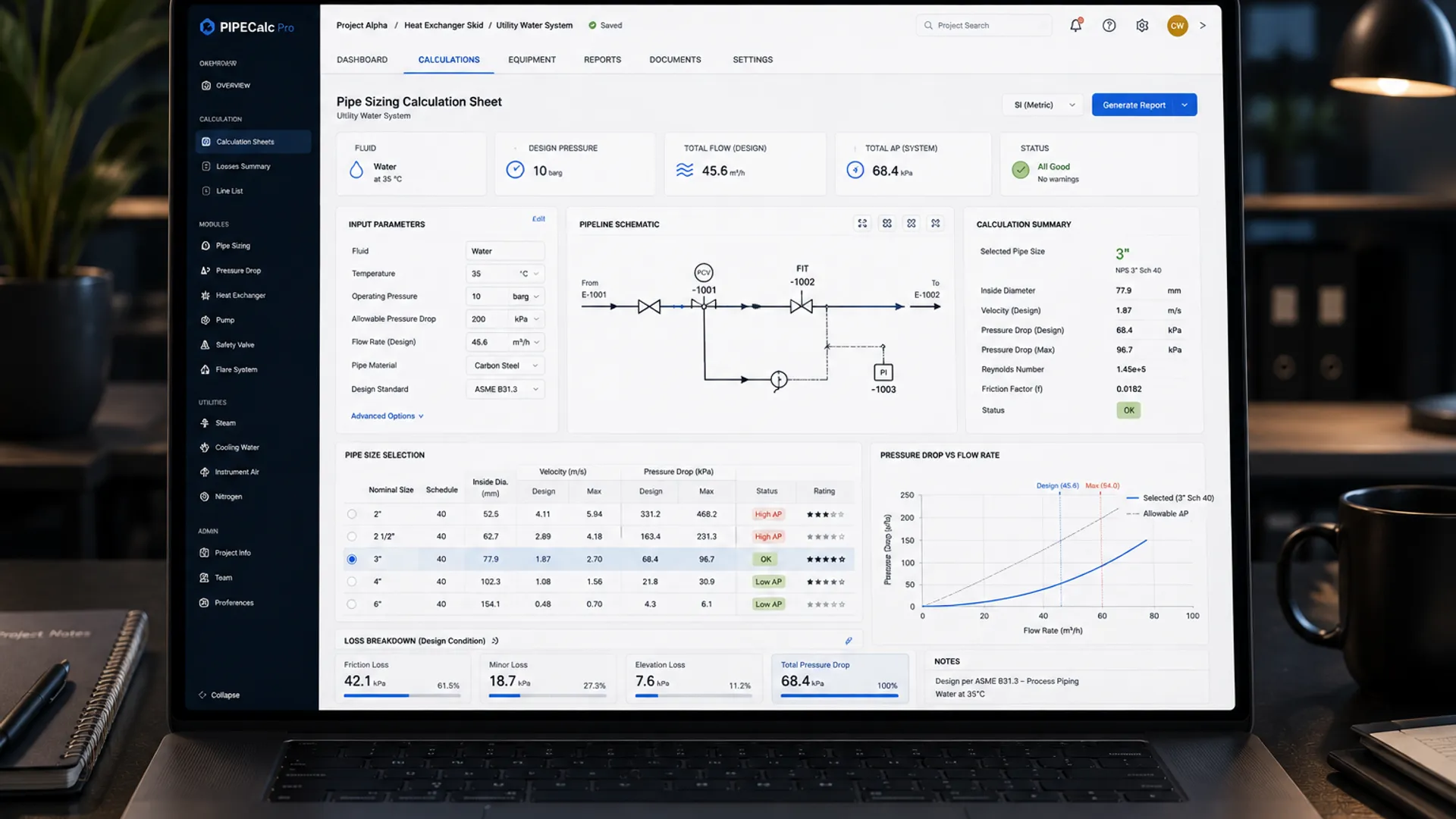
Start with the check the firm runs most — wind load to MS 1553, or member capacity to MS EN 1993 with the Malaysian NA. We rebuild it as deterministic software: factor tables published, code edition fixed, the same inputs always producing the same result, and a numbered calc report out of every run. That is Estimating & Engineering Software, quoted per project after the Diagnostic and Blueprint — and acceptance is the Re-quote Test: twenty past submissions re-computed by the new tool, tolerance agreed in writing, the balance payable on pass.
We should be straight about proof. Valtrin has no consultancy clients to name yet; what we can show, live on the first call, is the same class of work running — our own estimating engine and Quadron, the parametric CAD tool we built and use daily. From there, assembling the submission package itself — cover sheet, load summary, check reports collated in your format — is Engineering Workflow Automation, quoted per project, and a portal where each client logs in to their own project is the Standard level of Client Portals.
From the calculation library
One method for the firm. Not one per engineer.
The ladder, in this room
What the three levels look like here.
Essential
One check the firm re-runs weekly — wind load to MS 1553, say — rebuilt as a validated tool. Twenty past submissions re-computed within a written tolerance before you pay the balance.
Standard
The whole office on one tool with one method: juniors run the checks, a senior reviews and signs off in the tool, and every calc report carries its revision and reviewer.
Advanced
Checks, connection sheets and load summaries flow into one submission package per project, revision-controlled end to end — and a client can be shown exactly what changed between Rev B and Rev C.
Start here
Bring us the wind-load sheet only one engineer trusts.
Send one workbook and the calc package it last produced. We'll walk the path from inputs to submitted PDF and tell you honestly whether a validated tool would pay for itself. The 30-minute review is free; the Diagnostic and Blueprint that follows is RM 2,500, credited in full against the build.
The workflow review is free, and you don't need to know the technical solution. Describe how the work happens today — that's the whole brief.